“”Nohadate”: The Farmer’s First Work and Rice Crop Divination”
In Iriya, a satoyama farming district in Minamisanriku, a traditional New Year ritual known as Nohadate has been passed down through generations to divine the upcoming year’s harvest. In the local dialect, hadate means “beginning,” and Nohadate marks the official start of the farming year.
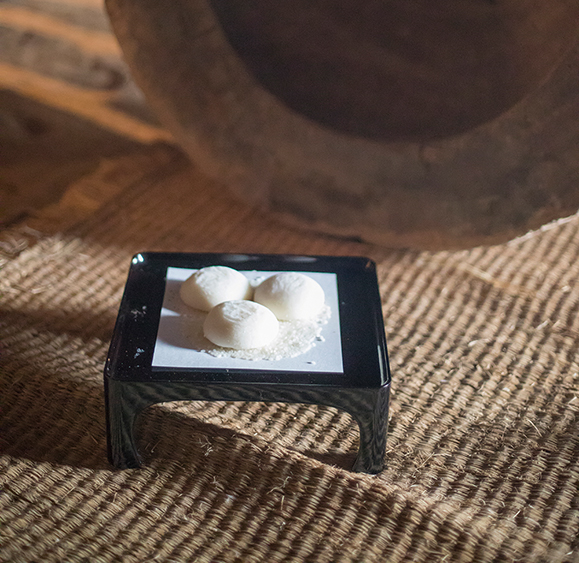
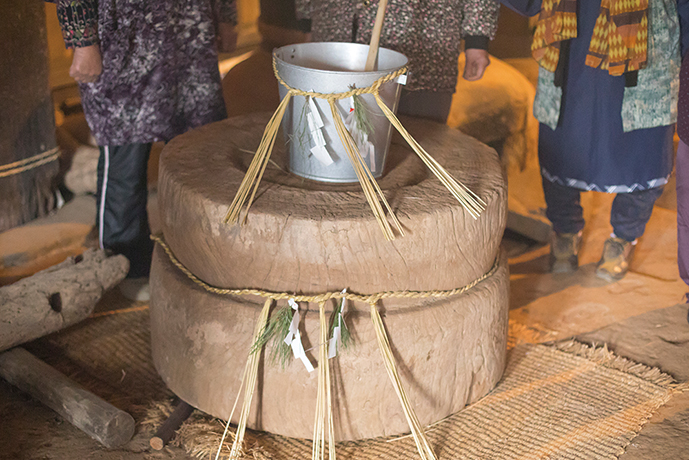
The preparation begins late in the year, on December 28th. On the day the New Year’s rice cakes (mochi) are pounded, three freshly pounded, flattened round mochi are placed on top of rice inside a one-sho measuring box (issho-masu). This box is placed on the earthen floor (doma), covered with a washed, inverted mortar (usu), and left to welcome the New Year.
On New Year’s Day, fresh wakamizu (“young water”) is drawn using a newly made ladel. This water, the very first drawn of the new year, is placed in a new bucket and offered atop the inverted mortar.
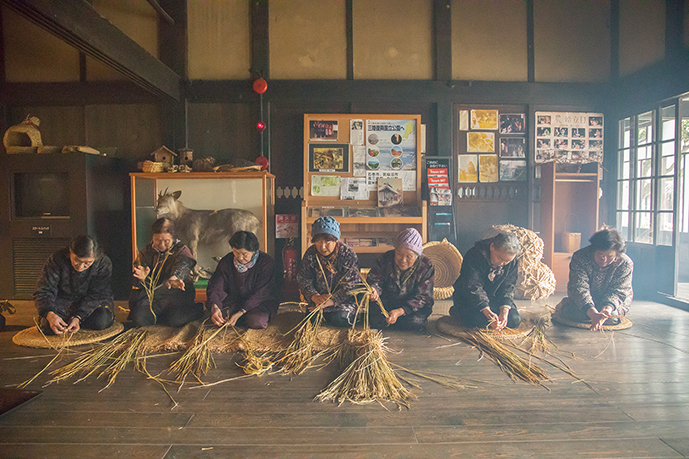
January 11th marks the official start of farm work. Waking up while it is still dark, family members spread straw mats on the earthen floor and begin twisting straw ropes. Straw ropes are an essential material for farmers, used for bundling charcoal or crafting everyday items like sandals and straw mats (mushiro).
Once this first task of the morning is complete, the young water is removed from atop the mortar, and the inverted mortar is flipped back to its normal position. The measuring box and rice cakes, which have remained sealed away for about two weeks, are finally brought back into the light.
The family first turns over the first of the three mochi. The underside of the freshly pounded mochi will be dotted with grains of rice from the measuring box. If many rice grains adhere to the mochi, it portends a bountiful harvest in the coming year.
Each mochi corresponds to a stage of the rice harvest: the first mochi divines wase (early-harvested rice), the second divines nakade (mid-season harvested rice), and the third divines oku (late-harvested rice).
On this morning, the divined mochi are toasted and added to red bean porridge (azuki-kayu) for a traditional meal known as Asa-nagashi.
There is a profound reason why Nohadate is performed in the dark hours of the early morning without a moment to waste. If agricultural work falls behind by even a single day, it leads to major delays during the busy summer farming season. Missing the proper seasonal window means diminished yields. This ritual has been handed down across generations to impress upon the community the strict discipline and unrelenting demands of farming, where missing the right timing is never an option.